
 Global connections
 Research & archive




Understand the mechanism
Follow the path from an initial statement to a decision and examine the evidence needed at each transition.
Explore the chain
We research. We teach. We help people recognise information influence.
Explore researchThree interconnected pillars of sovereignty: spirit, arms and resources. We examine a state’s own capabilities and its critical dependencies.
Learn more Two EU showcases: Polish development and Ukrainian war
 “Repositioning,” or What Riyadh Bought on Yemen’s West Coast
 Musk’s Empty Cradles: A Visionary of Global Extinction
Search titles and full texts of published materials.
All publications → 2025 · 2024 · 2023 Historical archiveExplore research, analysis and events by year and topic.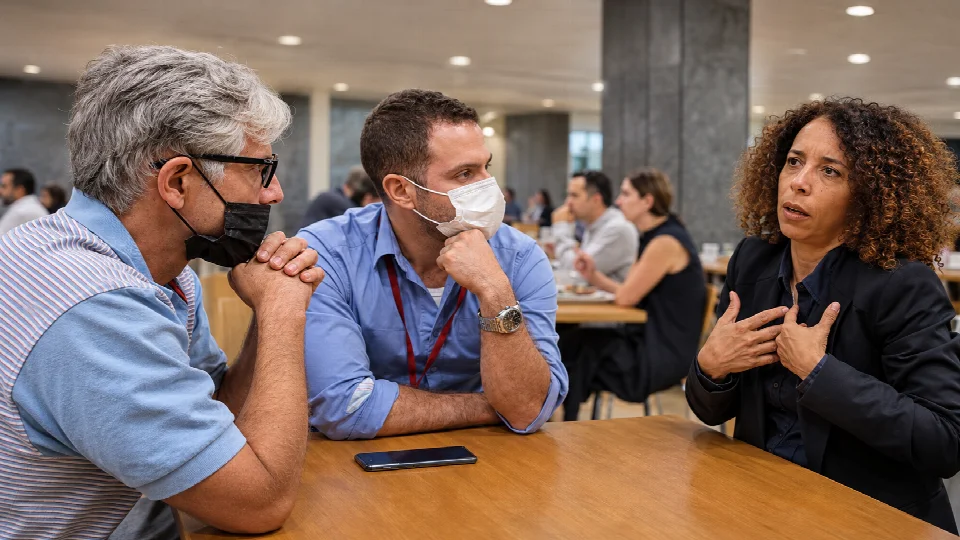 LearningSchool of SolidarityThe practice of working together on community issues.
Start with the published materials, then discuss your question with the centre.
Contact the centre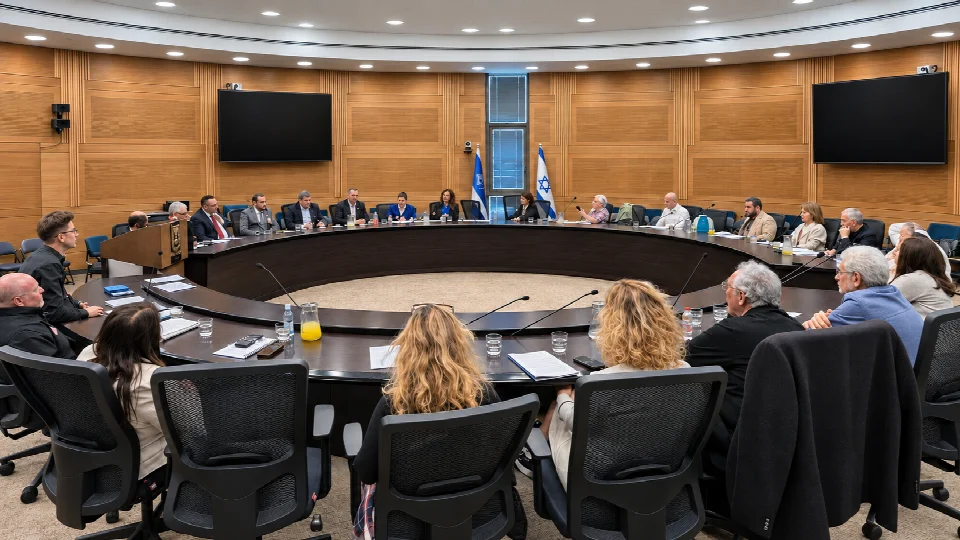 SolutionsPublic dialogueHaifa Format: a forum for discussing public issues.
Tell us about the issue, its context and the outcome you seek.
Write to usHow an external account of events becomes a basis for decisions. A research methodology for cognitive warfare, nine dimensions of sovereignty and practical work with evidence.
Here cognitive warfare is examined as a chain: a source establishes roles and an account of events; other actors reproduce that account; it enters decisions. The Sovereignty Triad identifies the dimensions in which to investigate consequences. Start with the mechanism, explore the Triad dimensions, then compare them with the published studies. For an applied task, continue to outputs and the research workflow. Detailed protocols are available in the extended methodology on request.
Follow the path from an initial statement to a decision and examine the evidence needed at each transition.
Explore the chainExplore nine dimensions. Dependence on an external actor and the penetration of its account are assessed separately.
Explore the dimensionsStart with the decision to be made and choose an output: a dossier, a profile, a responsibility map or a scenario brief.
Choose an outputSimilar wording, widespread repetition and a political consequence do not, on their own, establish a single causal chain. For example, repetition of a phrase across several outlets lets us study its circulation. Linking it to a change in policy requires additional documents and intermediate steps.
Constructs a persistent account: heroes, victims, villains and the criteria for success.
Check the original document, date, language, author and assignment of roles. Accurate facts can also form part of this account.
Carry formulations into other settings, where the origin of the account becomes less visible.
Distinguish the source’s own channels from independent carriers. Earlier use of a formulation requires attribution to be reconsidered.
The account becomes an argument in legal, diplomatic, economic or political action.
A decision document, a dated sequence and an intermediate link are required. Similar wording alone is insufficient.
“Transfer” describes assigning the role of an external adversary to a participant in domestic politics. “Bundling” ties separate issues into an indivisible set of positions. These are questions for documentary and survey research, not ready-made labels for citizens.
Explore the modelA catalogue of indicators for examining observed activity. It guides evidence collection; it does not prescribe influence campaigns.
Roles, success criteria, historical frames and a desired future.
Formulations moving from statements into headlines, documents and public debate.
The path into coalitions, resolutions, court cases and institutional decisions.
Links between official communication, broadcasting and apparently independent carriers.
Educational, expert and academic relationships operating across generations.
Who describes an event first, and who must respond within terms already set.
Restrictions on a party’s ability to communicate its own account of events.
Changes across languages and settings, and the entry of external roles into domestic disputes.
A type depends on the role assigned to a country in the account under study. It remains a testable hypothesis. Allies and opponents are examined by the same method.
A state account assigns another country a persistent role as the guilty party.
Diplomatic mediation and public broadcasting assign different roles to the same country.
Influence concerning one country serves a purpose directed against a third state.
A society becomes an arena for an external conflict whose roles enter domestic politics.
A partner seeks a change in a particular policy without assigning an immutable enemy role.
Spirit sets objectives, Arms enable action, and Resources sustain it. Their connections matter: financial dependence can support influence on elites, while changes in worldviews can precede decisions on supplies and alliances.
Define objectives
Examine the origin of roles and beliefs, their reproduction by elites and their persistence across changes of government.
Extended materials · access on requestCompare channels, language segments, attribution in republication and the sources used by language models.
Extended materials · access on requestTrace concepts into legal documents and decisions; separately examine the cost of non-compliance.
Extended materials · access on requestDecide and act
Study supplies, maintenance and restrictions. Test the cognitive path through a supplier state separately from dependence itself.
Extended materials · access on requestDistinguish similar arguments, participation by a connected network and documented coordination.
Extended materials · access on requestCompare coalition formulations, international decisions and the role of mediators.
Extended materials · access on requestSustain the future
Consider suppliers, transit, markets and alternative costs. Separately test the justifications for restrictions.
Extended materials · access on requestExamine critical systems, licences and research partnerships, alongside reasons for ending cooperation.
Extended materials · access on requestTrack intentions and trends. Do not assign a score to an individual actor without evidence separating its contribution.
Extended materials · access on requestDependence and cognitive depth are assessed separately for each external actor. Own capability describes the country under study in that dimension. These measures are compared, not added into an overall score.
What does it cost to forgo a supply, a transit route or a binding decision?
How far has the source’s account travelled through carriers into decisions?
Are there means, an accountable body and sufficient coverage for independent action?
Studies of Israel provide the starting material. Work in another country or organisation requires a fresh definition of context, sources, languages and the research question.
65.7% of respondents believe foreign states pursue a long-term influence programme. The study was conducted within the Haifa Format project with Geocartography.
An online survey of adults, fielded in mid-October. It measures perceptions; it does not establish that an influence operation exists.
Read the data and methodologyObjectives, channels, institutional instruments and perceived consequences. The report allows readers to compare the grounds for assessments and differences between experts.
Expert judgements are not independently verified facts. A discrepancy in the ranking table is disclosed in the report; we do not use it as a measure of effectiveness.
Read the expert reportHow positions on different issues combine into incompatible worldviews. Haifa Format publications connect this question to research on Israeli society.
The model helps frame questions and compare explanations. Similar narratives alone do not establish coordination or external control.
Explore the modelStrong conclusions require an independent second assessment and a pre-specified falsification condition. Missing evidence does not mean zero influence.
Every element is supported by a dated document.
Documents are established; their connection is analytically inferred.
Some elements await verification, with a timetable for collecting evidence.
Evidence is insufficient or contradictory, or analysts disagree.
The task specifies the object, horizon and available data. The methodology sets the research sequence and outputs; the scope and timing of a particular project are agreed during scoping.
Own capability, two scales, mediated influence and prioritised vulnerabilities.
Discuss a projectObjectives, the role assigned to the country under study, channels, instruments and a condition for revising the hypothesis.
Discuss a projectDates, intermediate links, implementing actors and areas without an accountable body.
Discuss a projectA path from the first statement to the current link, separating facts and interpretations.
Discuss a projectBranches, assumptions and observable early-warning indicators.
Discuss a projectWhich formulations and actions appeared, where, and what changed over the period.
Discuss a projectRoles, terms, transfer and evidence examined through a working task.
Programmes and curriculumA sequence connects the initial question to a recommendation. Each transition produces an output; measurements are held in a single matrix rather than duplicated across dossiers.
Decision, object, horizon, deadlines and starting evidence.
Expectations and falsification conditions recorded before monitoring.
Means and accountability assessed across nine dimensions.
Dependence and depth, with evidence and confidence labels.
Influence through countries providing essential supplies or diplomatic support.
A chronology linking formulations, actions and feedback.
Documentary assessment compared with a separate survey measurement.
Institutional interfaces and uncovered links examined.
Branches and indicators that distinguish possible developments.
Action, responsible actor, deadline, outcome indicator and review procedure.
Public and municipal institutions, parliamentary and expert bodies, organisations and companies making decisions in a complex information environment. These are applications of the methodology, not a list of existing contracts.
Programmes for leaders, analysts and interagency teams, built around the centre’s methodology, published research and exercises followed by a review of decisions.
The Triad, two scales, own capability and priorities.
A defined task, a responsibility map and criteria for accepting the research output.
Dossiers, eight instrument groups, origins of formulations, the matrix and alternative explanations.
An episode analysis with sources, confidence labels and a second assessment.
Handovers between functions, gaps in accountability and action under incomplete information.
A decision log, a map of uncovered links and a plan to revise procedures.
Duration is indicative and agreed for each programme. Teaching and exercises take place within a separately arranged programme; this site provides descriptions and an enquiry form.
Publications document the underlying research and the development of the model. Detailed scales, protocols and the author’s methodology are collected in a separate Triad section.
Data on countries, information policy and perceptions of social groups.
Objectives, channels, long-term instruments and limits of expert assessments.
An authored analysis of political language and accusatory frames.
Ontological bubbles, radicalisation and incompatible worldviews.
An external threat and differences in assessments within Israeli society.
Resources, capacity for action and the meaning-related foundations of independent decisions.
The Sovereignty Triad, the cognitive warfare model and research protocols. Igor Kamennik’s authorial framework.
The subject is a documented chain of external influence, not citizens’ loyalty. The method excludes lists of citizens, content removal and counterpropaganda.
No. Surveys measure perception, information sources and attribution of positions. Actual depth is established through documents; the measurements are then compared.
The same method applies to every actor. Facts, assessments and interpretations are separated, and relevant relationships are disclosed. The commissioner sets questions but does not rewrite conclusions.
Research, team preparation or a combined project for an institution. Start with the context and the outcome you need.
A question, an idea or a collaboration — tell us what you would like to discuss. We will reply through your chosen channel.