

 Global connections
 Research & archive






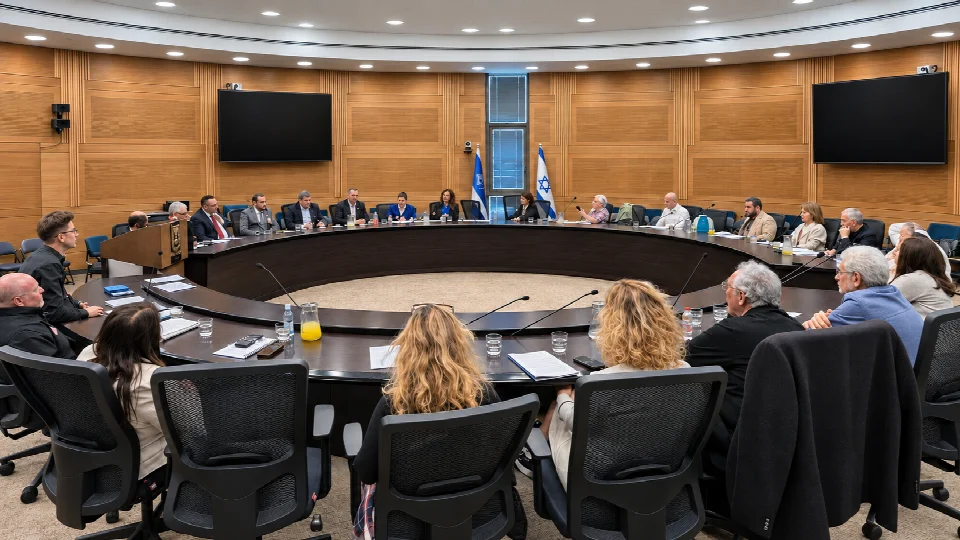


The judicial overhaul was the Netanyahu coalition’s main goal throughout the term of the 25th Knesset. On November 18, 2026, a day after Gadi Eisenkot’s Change Bloc took control of the Knesset, the new majority gave preliminary approval to bills that would repeal the key laws of the overhaul. The Change Bloc’s first move is to give back to the judiciary the power it had concentrated in its own hands for decades.
“Obey court rulings without question”
On November 17, Eisenkot’s bloc, which the Israeli press calls the Change Bloc, took control of the Knesset. Matan Kahana was elected speaker with 66 votes; in a separate vote, the Likud candidate, Ofir Katz, received 52[1]. This is almost the same majority that recommended Eisenkot to the president, 67 lawmakers, including both Arab parties with their 19 seats[2]. Overnight the plenum approved, 38 to 15, nine temporary deputy speakers, among them Walid Taha of Ra’am and Ahmad Tibi of the Joint List, and the majority in the presidium, which decides which bills reach the floor, went to the bloc together with the Arab parties[1],[3]. Earlier still, the bloc had taken the Arrangements Committee, which in a new Knesset sets the agenda and assigns bills until the permanent committees are formed. It is chaired by Roy Folkman of Yashar[4],[5]. In his first speech, Kahana pledged that under him the Knesset would obey court rulings without question[6].
The Change Bloc declared the repeal of Levin’s judicial overhaul its first task. As early as July 16, 2026, Eisenkot called the overhaul laws reckless and vowed to repeal them if he became prime minister. After the election, the bloc’s parties agreed to make the repeal their priority and to complete it within the 42 days during which Eisenkot holds the mandate to form a government[7],[8],[9]. The Arrangements Committee agenda lists the repeal of the Judicial Selection law, the attorney general law, the law on the police investigations department, and the media reform.
On November 18, Folkman’s committee exempted the bills from the 45-day waiting period. The plenum then gave preliminary approval to the repeal of the Judicial Selection law and to the repeal of the attorney general law, each by 63 votes to 47, and to the repeal of the media reform by 63 votes to 49[5],[10],[11]. The repeal of the police investigations law was not brought to a vote[12]. A preliminary reading only opens the procedure. If the repeals pass all three readings, the Judicial Selection Committee will return to its old composition and the attorney general’s opinions will remain binding on the government.
| Law proposed for repeal | For | Against |
|---|---|---|
| Judicial Selection Committee | 63 | 47 |
| Attorney general | 63 | 47 |
| Media reform | 63 | 49 |
“Constitutional revolution”
The power of Israel’s judicial and legal system rested on four pillars. The first was the way judges were appointed. They were chosen by a committee on which, since 1953, politicians had held four of the nine seats, while judges and Bar Association representatives together held a majority[13],[14]. The second pillar was the Supreme Court’s power to strike down Knesset laws. The Supreme Court and the High Court of Justice, known by its Hebrew acronym Bagatz, are one and the same court with the same justices. As the Supreme Court, it hears appeals against rulings of lower courts, and as the High Court of Justice, it hears citizens’ petitions against state authorities as the first and final instance[15]. In the United Mizrahi Bank ruling of November 9, 1995, the Supreme Court recognized the constitutional supremacy of the Basic Laws and grounded its power to strike down ordinary laws that contradict the constitutional requirements set in them[16]. The court had earlier protected individual specially entrenched provisions of the Basic Laws but had not formulated a general principle of their supremacy[17]. Supreme Court President Aharon Barak called the ruling a constitutional revolution[17].
Reasonableness was the third pillar. Under it, the High Court canceled decisions of the government and ministers, even formally lawful ones, when it found them extremely unreasonable, that is, made without regard to relevant considerations or with clearly disproportionate weight given to them[18]. The standard applied to decisions of the authorities, not to laws. On January 18, 2023, the High Court ruled 10 to 1 that the appointment of Shas leader Aryeh Deri as a minister was extremely unreasonable because of his criminal convictions, and Netanyahu had to fire him[19],[20]. The fourth pillar was the legal advisers. The attorney general holds two roles at once, heading the state prosecution and giving the government legal opinions, which, like those of ministry legal advisers, are binding on the government[21],[22].
Four pillars of the judicial and legal system
Judicial appointments
Politicians held 4 of the old committee’s 9 seats; judges and Bar representatives together held a majority.
Review of legislation
Following the 1995 United Mizrahi Bank ruling, ordinary laws are reviewed against the Basic Laws.
Reasonableness
Government and ministerial decisions are reviewed for extreme unreasonableness. This concerns decisions, rather than laws.
Legal advisers
Legal opinions bind the government. The attorney general also heads the state prosecution.
Justice Minister Yariv Levin presented the overhaul on January 4, 2023, and it targeted all four pillars[23]. On the Judicial Selection Committee, the government would gain the deciding voice. The Knesset would gain the right to re-enact a law struck down by the Supreme Court with 61 votes. The High Court would no longer cancel government decisions on grounds of reasonableness. Ministers would be able to hire and fire their own legal advisers, and the advisers’ opinions would no longer be binding[22],[23].
Dor Moriah’s survey of Israelis’ attitudes to the judicial overhaul was carried out in 2023 by the Maagar Mochot center, with a sample of 1,000 adult Israelis and a margin of error of 3.1 percentage points at a 95% confidence level[24]. Some reform of the legal system was considered necessary by 63% of respondents, and by 72% of those with an opinion. The judicial system was called ineffective or of low effectiveness by 60%, excessively bureaucratic and slow by 61% of those who answered, and 60% of those with an opinion distrusted the courts or trusted them little. Some 4% took part in demonstrations against the reform regularly, while 89% did not take part or did so only occasionally[25]. Right-leaning respondents showed the most distrust of the courts, and left-leaning respondents were the only group with a positive trust index[26].
The first law of the overhaul abolished the reasonableness standard, and the Knesset passed it on July 24, 2023, as an amendment to the Basic Law on the Judiciary[18]. The court’s response showed how much the standard mattered to the judicial system. Cases at the Supreme Court are usually heard by three justices, with expanded panels for especially important cases, yet the reasonableness amendment was heard by all 15 justices, for the first time in the court’s history[15],[27]. The Basic Laws stand in for a written constitution in Israel, and until then the court had never struck down any of them[28]. On January 1, 2024, it ruled 12 to 3 that it has the authority to review Basic Laws as well, and struck down the amendment 8 to 7[27],[29]. The Supreme Court gave itself the power to strike down Basic Laws by its own ruling, just as it had given itself the power to strike down Knesset laws in 1995, rather than receiving it from the Knesset[27]. Levin contended that the ruling undermined the balance between the branches of government[29].
On March 27, 2025, the Knesset passed the Judicial Selection law by 67 votes to 1, with the opposition boycotting the vote[30],[31]. The law removes the two Israel Bar Association representatives from the committee and gives politicians six of the nine seats, four to the government and two to the opposition. It takes effect in the current 26th Knesset[14]. On the day it passed, Yair Lapid, Benny Gantz, and Avigdor Liberman pledged to repeal it in the next Knesset[30].
On July 15, 2026, the Knesset passed the attorney general law by 61 votes to 51[21]. Under it, the attorney general’s opinions will become recommendations that the government is free to reject, and in court the government will be allowed to adopt its own position and hire a private lawyer if the attorney general refuses to defend it[21]. The bill also provided for splitting the attorney general’s role as government legal adviser and head of the state prosecution, but that provision was removed from the final law[21]. The law takes effect on January 1, 2027[21].
In parallel, Communications Minister Shlomo Karhi carried out a reform of broadcast regulation. In the dispute over that reform, on July 5, 2026, the government for the first time in Israel’s history openly refused to comply with a High Court ruling. The ruling concerned the council of the Second Authority for Television and Radio, the state regulator of commercial television, and Dor Moriah described the refusal as a constitutional crisis[32],[33]. On July 19, the court froze part of Karhi’s law, and the minister said the court had no authority to freeze or strike down laws[34]. The repeal of the media law belongs to the same conflict over the court’s powers.
“We will appoint 10 judges to the Supreme Court”
Repealing the judicial overhaul became the first task because it is the only point on which all 67 lawmakers of the bloc and the Arab parties agree. On everything else, the bloc is split along two lines. Some of its members reject a government that rests on the Arab parties. Attitudes toward Netanyahu also differ. Liberman and Yair Golan refuse to sit in a government with him[35], Yair Lapid accepts a rotation only with Eisenkot first, and Eisenkot himself opposes any rotation. Of the 67, 63 voted for the repeal, and without Arab votes it would have received no more than 48.
Repealing the overhaul also has to come before a government is formed because of a possible rotation. On November 19, it emerged that intermediaries were proposing a unity government in which Netanyahu would serve as prime minister for the first two years and then be elected president early[36]. If the 2025 law stays in force, such a rotation would give Netanyahu’s cabinet the influence over judicial appointments that the law provides. Repealing the law before a government is formed removes that prospect.
Issues on which the bloc has not yet reached agreement depend on the judiciary as well. The first is the Haredi draft. On June 25, 2024, the High Court ruled 9 to 0 that in the absence of a law exempting yeshiva students from service, the state must draft them and stop funding yeshivas whose students evade service[37],[38]. Eisenkot presented his partners with a conscription bill and said the IDF is short of 12,000 combat soldiers. Rabbi Dov Lando said he would not accept any law with a quota on yeshiva students, and the Likud offered the Haredi parties an end to arrests of draft evaders through the ministries it still controls[39]. As long as court rulings and the attorney general’s opinions are binding, the draft proceeds by High Court ruling without a new law, and the Likud’s promise to stop arrests through the ministries runs against that ruling. Bezalel Smotrich has already said how his camp would change that. As early as February 17, 2026, he said, “In the next term, we will appoint 10 judges to the Supreme Court, a new Attorney General, and a new State Attorney.”[40]
Netanyahu’s own fate also rests with the attorney general and the judges, since he is on trial in a criminal case. The attorney general is now being asked to open another investigation. The Uvda program on Channel 12 reported that the information behind the arrest of Ra’am activists on Election Day came from the Prime Minister’s Office[41]. The office called the report false but confirmed that its chief of staff, Ido Norden, had put the source of that information in touch with the police[42]. Leaders of the Change Bloc and the Arab parties, among them Liberman, Lapid, Golan, and Tibi, demanded that the attorney general open a criminal investigation into the office, and Liberman called it illegal interference by the office in the election[43]. Eisenkot said Netanyahu must not be allowed to remain at the head of the government for even one more minute[43].
“Levin’s speech on steroids”
The repeal of the judicial overhaul is being carried with the votes of the Arab parties, and members of the Netanyahu coalition call these parties “supporters of terrorism.”[44] Naftali Bennett and Liberman vote for the repeal together with them but refuse a government that would rest on the same votes[45]. The Likud builds its tactics on this contradiction. On November 18, it gave preliminary approval, 48 to 0, to Ofir Katz’s bill stripping rights from lawmakers who do not recognize Hamas as a terrorist organization[46]. Voting against would have put the Change Bloc alongside the Arab parties on Hamas, and voting for would have meant a break with them. The Change Bloc walked out together with Ra’am and the Joint List, calling the vote political theater[46].
At a meeting of the bloc’s leaders, Bennett warned his partners that the right-wing camp would receive a government sworn in with Arab votes the way the left received Levin’s overhaul, only more sharply. “Swearing in a government with Arab votes will be, for the other side, like Levin’s speech on steroids,” he said. Levin’s January 2023 speech launched the judicial overhaul and the mass protests against it. On November 18, Levin himself called the repeal a disgrace and said, “Everything you are trying to repeal will return, and with even greater force.”[47]
The judicial system has stopped being just one branch of government. In the eyes of both camps, it is tied to Arab votes, the Haredi draft, and Netanyahu’s criminal case, so a position on the court means a position on all of these at once, as a package. In the right-wing camp, a vote to repeal the overhaul is seen as a vote for the Arabs, for arrests of Haredim, and for the absolute dominance of legal advisers and judges over the Knesset and the government. For the national-religious camp, the judicial system, whose power is being restored by the votes of the Arab parties, becomes an instrument for destroying the Jewish state and turning it into a secular liberal state in which “supporters of terrorism” hold the deciding voice.
“The end of history” versus “the rejection of borders”
The judicial overhaul was not the Netanyahu coalition’s only line of activity. Another was extending Israel’s sovereignty over the West Bank. The coalition pursued it mainly through cabinet decisions, and the fate of those decisions rests with the attorney general and the High Court. On February 8, 2026, the security cabinet extended Israeli enforcement into Areas A and B and transferred authority over building permits in Hebron to the Civil Administration, and on February 15 the government approved land registration in the West Bank for the first time since 1967[48],[49],[50]. The Knesset’s July 23, 2025, motion on sovereignty over Judea, Samaria, and the Jordan Valley was non-binding[51]. On October 22, 2025, Avi Maoz’s bill applying Israeli sovereignty to Judea and Samaria passed a preliminary reading by 25 votes to 24, and Liberman’s bill on sovereignty over Ma’ale Adumim passed by 32 votes to 9. Neither has advanced beyond the preliminary reading[52],[53]. On November 16, Liberman himself became chair of the temporary Foreign Affairs and Defense Committee, which until permanent committees are formed oversees the army, the security services, and foreign policy[54].
On Gaza, Lebanon, and Syria there are no sovereignty decisions, only IDF security zones and statements by ministers. In March 2026, Smotrich said the Litani River must become the new border with Lebanon, as with the Yellow Line in Gaza and the peak of Mount Hermon in Syria[55]. On September 27, he called for annexing territory at least up to the Yellow Line in Gaza and up to the Litani in Lebanon[56]. In the unity talks, according to sources in Eisenkot’s bloc, the Likud listed among its principles keeping IDF positions on all fronts until the threats are removed[57].
One may suppose that the Change Bloc will seek to undo the national-religious coalition’s changes along two lines, through decisions of the new cabinet and through legal review of measures already taken. Cabinet decisions can be revoked by cabinet decision, without a Knesset vote. The attorney general can declare the existing sovereignty decisions contrary to the law and to Israel’s international obligations, and the High Court can strike them down on petitions, including on grounds of reasonableness. Every new decision on the security zones will face the same review. The Arab parties can refuse to support a government that continues extending sovereignty in the West Bank and keeps the security zones in Gaza, Lebanon, and Syria, and without their votes the Change Bloc has no majority. The sovereignty bills could also split the bloc from within, since Liberman introduced one of them.
Behind the dispute over the court and sovereignty stand two pictures of Israel’s future, which Dor Moriah has described as “the end of history” and “the rejection of borders.”[58] For secular Zionists, Israel is an already built democratic state with a strong economy and a moral reputation, which needs international legitimacy and recognized borders. For national-religious Zionists, the building of Israel is not finished and has no final borders. Every new settlement and every sovereignty decision continues that building[58]. The repeal of the judicial overhaul restores power to the court and the attorney general, on which the secular Zionists’ Israel rests. Revoking the sovereignty decisions in the West Bank puts in question the expansion of settlements and the annexation of land without which the building of Israel, as national-religious Zionists understand it, loses its meaning. For each side, giving way here means abandoning its own idea of Israel’s future.
Gadi Eisenkot photograph: Yahav Trudler / Yahav Studio; editorial photomontage. Cover licensed under CC BY-SA 3.0.
Sources
- JFeed, Knesset elects Kahana speaker and approves nine temporary deputies, 17.11.2026, jfeed.com ↩
- Khaleej Times, Israel president to name PM candidate on Nov 8, 06.11.2026, khaleejtimes.com ↩
- JNS, Knesset approves 9 deputy speakers, including MKs Tibi, Taha, 16.11.2026, jns.org ↩
- Davar, Knesset approves the Arrangements Committee proposed by Roy Folkman, 11.11.2026, davar1.co.il ↩
- The Times of Israel, Knesset panel waives waiting period, allowing Eisenkot bloc to advance repeal of judicial overhaul, 18.11.2026, timesofisrael.com ↩
- JFeed, Kahana vows Knesset will obey court rulings, 18.11.2026, jfeed.com ↩
Show all sources (58)Collapse sources
- Bloomberg via China Daily, Netanyahu rushes disputed laws to lock in allies before Israeli election, 16.07.2026, chinadailyhk.com ↩
- Ynet, the bloc seeking to replace Netanyahu prioritizes repealing judicial overhaul laws, 11.2026, ynetnews.com ↩
- Ynet, Legislative blitz, anti-Netanyahu bloc races to undo judicial reform before new government takes office, 11.2026, ynetnews.com ↩
- Ynet, Eisenkot bloc begins push to reverse Netanyahu's laws with judicial overhaul repeal, 18.11.2026, ynetnews.com · Knesset website ↩
- The Times of Israel, Knesset votes 63-47 to repeal law weakening AG's powers in preliminary vote, 18.11.2026, timesofisrael.com ↩
- JFeed, Knesset takes first step toward repealing judicial selection committee law, 18.11.2026, jfeed.com ↩
- Jordan News, Knesset approves law that will forever change the Israeli judiciary, 27.03.2025, jordannews.jo ↩
- Associated Press, Israel's parliament approves a key part of Netanyahu's divisive judicial overhaul, 27.03.2025, clickorlando.com ↩
- Wikipedia, Supreme Court of Israel, en.wikipedia.org ↩
- Supreme Court of Israel, CA 6821/93 United Mizrahi Bank v. Migdal Cooperative Village, 09.11.1995, versa.cardozo.yu.edu ↩
- Wikipedia, United Mizrahi Bank v. Migdal Cooperative Village, en.wikipedia.org ↩
- Israel Democracy Institute, The Standard of (Extreme) Unreasonableness, idi.org.il ↩
- The Times of Israel, In bombshell ruling, High Court nixes Shas head Deri from serving as minister, 18.01.2023, timesofisrael.com ↩
- Globes, Netanyahu fires Deri following High Court ruling, 22.01.2023, en.globes.co.il ↩
- Ynet, Knesset passes law curbing attorney general's powers, 15.07.2026, ynetnews.com ↩
- Dor Moriah, The judicial reform, introduction to the study, main points of the reform (Russian), 2023, dor-moriah.org.il ↩
- JNS, Israel's Justice Minister announces sweeping plan for judicial reform, 04.01.2023, jns.org ↩
- Dor Moriah, Israelis' attitudes to the judicial reform, methodology, Maagar Mochot survey, 1,000 respondents (Russian), 10.06.2023, dor-moriah.org.il ↩
- Dor Moriah, Main results of the survey on Israelis' attitudes to the judicial reform (Russian), 10.06.2023, dor-moriah.org.il ↩
- Vesti, Dan Fayutkin, Igor Kaminnik, Maidan technologies in Israel, how and why the protest against judicial reform is inflated (Russian), Dor Moriah survey, fieldwork by Maagar Mochot, 12.06.2023, vesty.co.il ↩
- Bloomberg, Israel's top court overturns Netanyahu's judicial oversight law, 01.01.2024, bnnbloomberg.ca · Translation of the official judgment abstract ↩
- World Israel News, A first, Israeli High Court strikes down amendment to Basic Law, 01.01.2024, worldisraelnews.com ↩
- Ynet, In historic 1st, Supreme Court strikes down Basic Law amendment, 01.01.2024, ynetnews.com ↩
- TPS, Knesset gives government greater control over judicial appointments, 27.03.2025, tps.co.il ↩
- International IDEA, Democracy Tracker, Israel, March 2025, idea.int ↩
- The Times of Israel, In first, government vows to disobey High Court ruling, setting up constitutional crisis, 05.07.2026, timesofisrael.com ↩
- Dor Moriah, How the Opposition Is Building the Case to Reject the Election Result, 08.07.2026, dormoriah.substack.com ↩
- The Jerusalem Post, High Court freezes elements of Communications Minister Karhi's media law, 19.07.2026, jpost.com ↩
- The Jerusalem Post, Yisrael Beytenu reaffirms refusal to join a unity government with Netanyahu, 15.11.2026, jpost.com ↩
- Ynet, The new idea, Netanyahu to serve two years as prime minister and move to the President's Residence (Hebrew), 19.11.2026, ynet.co.il ↩
- The Jerusalem Post, High Court unanimously rules against exemption for haredim in IDF, 25.06.2024, jpost.com · Judgment ↩
- UPI, Israel's High Court rules government must begin drafting ultra-religious students into military, 25.06.2024, ca.news.yahoo.com ↩
- JFeed, Rabbi Lando rejects Eisenkot draft plan, 11.2026, jfeed.com ↩
- Israel National News, Smotrich on appointing judges and the attorney general in the next term, 17.02.2026, israelnationalnews.com ↩
- Ynet, Report, Netanyahu aides suspected of fueling election fraud claims with planted intelligence, 11.2026, ynetnews.com ↩
- JFeed, Prime Minister's Office response to the Channel 12 report on the Ra'am arrests, 11.2026, jfeed.com ↩
- Ynet, Calls mount for a criminal investigation into the Prime Minister's Office, 11.2026, ynetnews.com ↩
- JNS, Tensions flare during Netanyahu's address to newly sworn-in Knesset, 10.11.2026, jns.org ↩
- Israel Hayom, Eisenkot, Liberman meet for coalition talks as major hurdles remain, 09.11.2026, israelhayom.com ↩
- The Times of Israel, Eisenkot bloc walks out of vote on Likud bill targeting MKs who won't call Hamas a terror group, 18.11.2026, timesofisrael.com ↩
- Israel National News, Judicial reform laws headed for repeal, 18.11.2026, israelnationalnews.com ↩
- The Times of Israel, Security cabinet okays West Bank policy overhaul, 08.02.2026, timesofisrael.com ↩
- Ynet, Cabinet approves far-reaching moves to deepen West Bank control, 08.02.2026, ynetnews.com ↩
- Al-Ahram, Israel approves land registration in West Bank for first time since 1967, 15.02.2026, english.ahram.org.eg ↩
- The Times of Israel, Knesset votes 71-13 for non-binding motion calling to annex West Bank, 23.07.2025, timesofisrael.com ↩
- Ynet, Knesset backs West Bank sovereignty bill, defying Netanyahu's withdrawal plea, 22.10.2025, ynetnews.com ↩
- The Jerusalem Post, Way to sovereignty, MKs react to preliminary vote, 23.10.2025, yahoo.com ↩
- JFeed, Liberman confirmed as chairman of the temporary Foreign Affairs and Defense Committee, 16.11.2026, jfeed.com ↩
- Israel National News, Smotrich, the Litani must be our new border with Lebanon, 23.03.2026, israelnationalnews.com ↩
- The New Arab, Smotrich calls for West Bank war, annexation of Lebanon, Gaza areas, 27.09.2026, newarab.com ↩
- Ynet, Likud conditions for a unity government according to Eisenkot bloc sources, 18.11.2026, ynetnews.com ↩
- Dor Moriah, Igor Kaminnik, The end of history versus the rejection of borders, 26.10.2026, dor-moriah.org.il ↩