

 Global connections
 Research & archive







On Sept. 21, 2026, in "The Third Case: Kabul, Damascus, Mokha,"[1] we wrote that salaried armies lose to mobilizational Islam and that buying allied armies had run its course. Two months later, the Houthis showed what that looks like on the ground at Bab al-Mandab.
The withdrawal from the strait
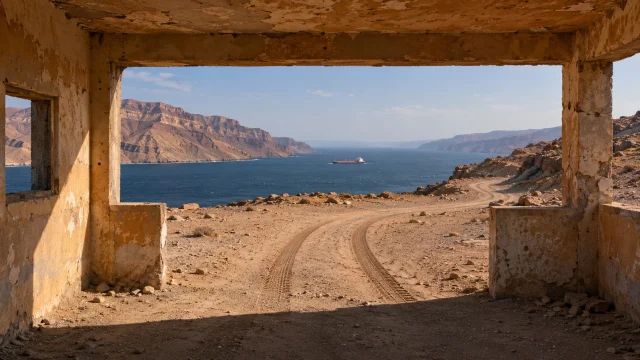
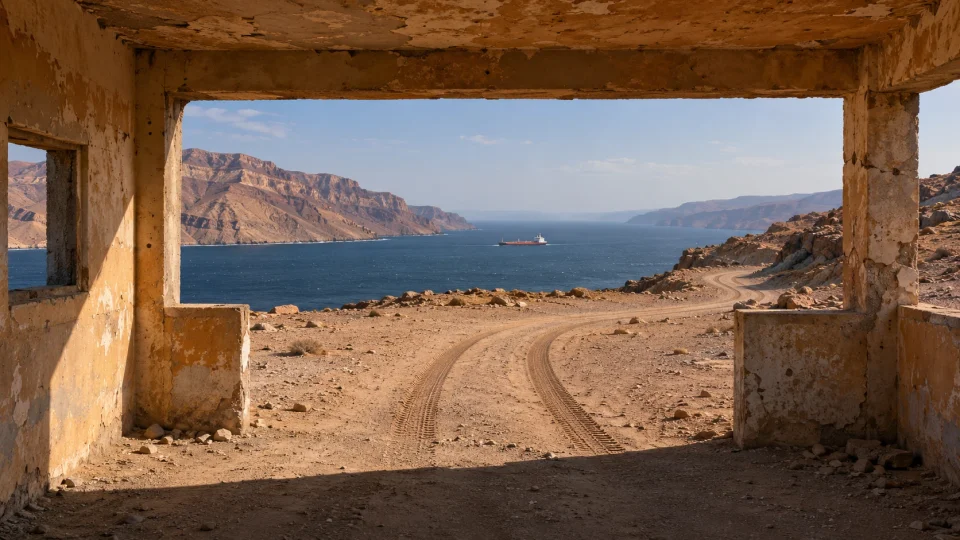
On Nov. 15, 2026, the Southern Armed Forces announced a redeployment from the Dhubab Airport area and the Bab el-Mandeb Strait, citing threats to Aden and neighboring provinces[2]. By Nov. 16, news agencies reported that the Houthis had taken positions on the Yemeni side of the strait and stepped up pressure around Aden[36].
On Nov. 16, Houthi military media released footage from areas abandoned by the Arab coalition and Saudi-backed forces[4]. Reports on the footage describe prisoners from the Southern Giants Brigades and Nation Shield Forces, as well as damaged, burned and captured vehicles, including U.S. and Emirati armored vehicles[5]. Houthi political bureau member Hizam al-Asad characterized the U.S. equipment as spoils taken from Riyadh-backed forces[5].
Who pays the southern forces
The Houthis said they had repelled a counteroffensive on the west coast[6]. Their claims about the scale of the fighting have not been independently verified. The other side calls itself the Coalition to Support Legitimacy in Yemen[7], and that legitimacy comes with a payroll. Yemeni and Western officials told Reuters that Riyadh budgeted nearly $3 billion in 2026 to pay Yemeni forces and civil servants, including about $1 billion for southern fighters previously paid by Abu Dhabi. They estimated total annual Saudi spending on Yemen at more than $4 billion[8].
Saudi funding in 2026
More than $4bn
Estimated total Saudi spending on Yemen in 2026.
Nearly $3bn
Within that total, salaries for Yemeni forces and civil servants.
About $1bn
Within the salary budget, payments for southern fighters.
The units that left Dhubab came from different patrons. The United Arab Emirates trained and armed the Giants Brigades and handed them American mine-resistant vehicles from its own U.S. purchases.[9] Rashad al-Alimi, chairman of the Presidential Leadership Council, created the Nation's Shield Forces by decree on Jan. 29, 2023, and placed them under his personal command.[10] In January 2026, Riyadh pushed the UAE out of southern Yemen. On Jan. 9, a delegation of the Southern Transitional Council in Riyadh announced the council’s disputed dissolution after its chairman, Aidarous al-Zubaidi, fled to the UAE,[11] and Riyadh took over the salaries Abu Dhabi had paid.[8]
On Oct. 4, coalition spokesman Maj. Gen. Turki al-Maliki pledged to support Yemeni forces until the Houthi threat was removed[7]. The Giants Brigades and Nation Shield Forces reached the Dhubab Airport area the following day[2]. Houthi pressure in Lahj intensified in November[3]. On Nov. 15, the southern formations withdrew toward Aden[2].
This is not the first time the Houthis have seized armor supplied to the coalition's allies. In September 2017, a Houthi television channel showed senior Houthi leader Mohammed Ali al-Houthi at the wheel of a captured American mine-resistant vehicle in Sanaa.[12] In February 2019, CNN traced the serial number of a Houthi-captured vehicle to a $2.5 billion U.S. sale to the UAE in 2014,[13] under which the Emiratis bought 1,150 BAE Caimans and 3,360 Navistar MaxxPros.[14] CNN and congressional Democrats reported at the time that the Giants Brigades had received MaxxPros from Emirati stocks and that Oshkosh M-ATVs had ended up with the Salafi Abu al-Abbas Brigade.[9] In the fall of 2019, a UAE official told CNN that American equipment had stayed under direct Emirati oversight "except for four vehicles that were captured by the enemy."[15] Reports on the November 2026 footage describe dozens of damaged or captured vehicles of different types.[5]
Why the strait matters to Riyadh
The southern forces announced the Nov. 15 withdrawal themselves. A source in the Yemeni presidency told Asharq Al-Awsat the pullback had three aims: defending Aden, reinforcing the Lahij fronts and breaking the siege of Taiz.[16] The strait is not on that list. For Riyadh, it comes first. After the Strait of Hormuz closed in late February 2026, Yanbu on the Red Sea handled 98.6 percent of Saudi crude exports in June, according to Wood Mackenzie, even as those volumes fell from their March peak,[17] and tankers bound from Yanbu to Asia exit through Bab al-Mandab.[18] Houthi-run outlets framed the footage as losses suffered by the Saudi enemy and did not mention the southern formations as a party in their own right.[19]
“Siege for Siege”
On Nov. 16, the Houthis declared they would keep operating on the principle of "siege for siege, airport for airport, and escalation for escalation," Al Jazeera reported.[20] According to the Critical Threats Project and the Institute for the Study of War, the Houthis are striking Saudi Arabia to force three concessions.[3] First, they want the authorities they run in Sanaa recognized as Yemen's sovereign government. Second, they want an end to controls on the ports and airports they hold, above all the port of Hodeidah[21] and Sanaa airport. Third, they want control over Yemen's oil and gas, most of which lies outside their territory. Hadramawt holds about 80 percent of the country's oil wealth,[22] and Marib is home to the SAFER oil and gas complex, which Al Majalla has described as a possible Houthi target.[23]
The fight over Sanaa airport is what reopened the war. On July 13, 2026, its runway was struck to keep an Iranian plane carrying a Houthi delegation from landing. Yemen's Defense Ministry claimed responsibility,[24] while The Associated Press and the Foundation for Defense of Democracies attributed the strike to Saudi jets.[25][26]
Washington and Damascus
Riyadh's options depend on its allies. Pakistan and Turkey have been bound to it by the Mecca Joint Defense Agreement since August 2026.[27]
Washington has kept its distance. On Sept. 10, 2026, the day of the assault on Mokha, Crown Prince Mohammed bin Salman spoke twice with President Trump and urged him to order strikes on the Houthis. Trump declined, CNN reported.[28] The White House said the United States was focused on core national security interests, including freedom of navigation in the Red Sea, while letting regional partners "take the lead."[28] The American role amounted to more than 100 military advisers in Saudi Arabia providing intelligence and targeting support, with about 200 U.S. personnel tied to the effort in all, by one U.S. official's estimate.[28] Adm. Brad Cooper, head of U.S. Central Command, was in Saudi Arabia for coordination meetings on Sept. 10, but the United States stayed out of the fight for Mokha.[28]
Damascus has moved closer. On Nov. 4, 2026, Mohammed bin Salman received Syrian President Ahmed al-Sharaa in Riyadh, the man whose forces in December 2024 drove from Idlib to Damascus in 11 days.[1] The two countries signed a military cooperation agreement, and Riyadh pledged $403 million in loans to Syria.[29] Syrian military advisers are working in Saudi Arabia, and Syrian fighters are being readied for deployment to the kingdom, The Associated Press reported on Nov. 8.[30] According to the AP, Riyadh insisted that the fighters be Syrian nationals rather than foreigners who came to fight in Syria's civil war.[30] According to Al Jazeera, Syrian officials told the AP that 600 special forces troops were due to arrive.[29]
Accounts of a deployment to Yemen itself conflict. In September, the Turkish outlet Türkiye Today reported that Damascus had turned down a Saudi request to organize and send fighters but was not stopping Syrians from going to fight in Yemen on their own.[31] On Oct. 7, three U.S. officials told Axios that the discussions included sending Islamist foreign fighters who had fought against Assad.[32] On Nov. 7, a source in the Presidential Leadership Council told Agence France-Presse that Syria would send up to 3,000 troops to Saudi Arabia and Yemen and that some were already on the ground.[33] The same day, a Syrian diplomatic source told the state news agency SANA that Damascus had no plans to send troops to Yemen, while leaving the door open to wider military cooperation with Riyadh.[34] Syria’s foreign minister repeated the denial on Nov. 9.[34]
Riyadh’s choices
Riyadh’s first option is financial. Paying the southern brigades gives Saudi Arabia some influence over their priorities. Southern leaders have faced Saudi conditions before. Southern Transitional Council chairman Aidarous al-Zubaidi flew to Abu Dhabi instead of attending talks in Riyadh[35].
That pressure might backfire. If the condition proves unacceptable to the southerners, Riyadh risks losing not just the strait but the brigades now holding Aden.
The second option is to rely more on Saudi capabilities and regional partners. That would reduce Riyadh’s dependence on southern commanders, but it would mean bearing more of the cost and risk or reaching agreement with Islamabad, Ankara and Damascus. Each has priorities of its own.
Riyadh has less room to maneuver as pressure on Aden grows[36]. The next payroll may show whether Saudi Arabia is using money to change the southern brigades’ priorities. New conditions could signal an attempt to regain influence around the strait. If payments continue on the same terms, the southern forces will remain focused on Aden, and the question of the strait will stay open.
Sources
- Dor Moriah team, "The Third Case: Kabul, Damascus, Mokha," Dor Moriah, Sept. 21, 2026. Read article ↩
- Bridget Toomey, "Houthis retake Bab al Mandeb and move toward Aden," FDD's Long War Journal, Nov. 16, 2026. The Southern Armed Forces' Nov. 15 statement is quoted in the outlet's translation. longwarjournal.org ↩
- Critical Threats Project and Institute for the Study of War, "Iran Update, November 15, 2026." criticalthreats.org ↩
- Background on the media source and the reported footage. Marsadak and The Telegraph (republished in the Irish Independent). marsadak.org ; independent.ie ↩
- Akhtar Makoii, "Houthis show off captured US military kit," The Telegraph, Nov. 16, 2026, republished by the Irish Independent. independent.ie ; yahoo.com ↩
- Claim by a party to the conflict cited in editorial material dated Nov. 17, 2026. The original source is unspecified. ↩
Show all sources (36)Collapse sources
- "Coalition vows continued support for Yemen, says Houthi attacks threaten regional security," Arab News, Oct. 4, 2026. arabnews.pk ↩
- Timour Azhari, "Saudi Arabia deploys cash and clout in Yemen after ousting UAE," Reuters via Al-Monitor, Feb. 5, 2026. marketscreener.com ; myind.net ↩
- "House Foreign Affairs Committee presses Administration for answers on U.S. weapons with al-Qaeda groups in Yemen," House Foreign Affairs Committee Democrats, February 2019; CNN investigation, Feb. 4–5, 2019. democrats-foreignaffairs.house.gov ; transcripts.cnn.com ↩
- "New Leadership Appointed for Saudi-Backed Nation Shield Forces," South24 Center, March 23, 2026. south24.net ↩
- Mohammed Sergie, "Saudi tightens grip on Yemen, deepening rift with UAE," Semafor, Jan. 9, 2026; "Yemeni southern separatists in Riyadh announce disputed disbanding of STC," Al Jazeera, Jan. 9, 2026; "Southern Yemen separatist group says it will dissolve after its head fled to the UAE," The Associated Press, Jan. 9, 2026. semafor.com ; aljazeera.com ; apr.org ↩
- "Saudi Arabia, UAE gave US arms to al-Qaeda-linked groups: Report," Al Jazeera, Feb. 5, 2019. aljazeera.com ↩
- CNN investigation, Feb. 4, 2019; serial number and sale value as summarized by Roundtable. transcripts.cnn.com ; roundtable.io ↩
- "Yemen inquiry finds Saudis diverting arms to factions loyal to their cause," inkl, 2019. inkl.com ↩
- CNN follow-up investigation, fall 2019, as republished by KRDO. krdo.com ↩
- Seth J. Frantzman, "Houthis gain ground near Red Sea shipping route as Yemen government redeploys forces," The Jerusalem Post, Nov. 16, 2026, citing Asharq Al-Awsat and Arab News. jpost.com ↩
- Wood Mackenzie data in "Saudi Arabia's Red Sea crude bypass peaks in March and declines 41% by June," World Pipelines, July 24, 2026; Vesseltracker, July 23, 2026. worldpipelines.com ; vesseltracker.com ; woodmac.com ↩
- "Bab el-Mandeb under threat: How can Saudi tankers escape the Red Sea trap?" Noon Post, July 23, 2026. noonpost.com ↩
- Al-Thawra (Houthi-run), headline on the Nov. 16, 2026, footage (Arabic). ↩
- Mohammad Mansour, "Houthis edge closer to Aden as Yemeni forces pull out of Bab al-Mandeb," Al Jazeera, Nov. 16, 2026. aljazeera.com ↩
- "Yemen sees worst clashes in years as fighting kills 129," Gulf News, September 2026. gulfnews.com ↩
- Sam Ali, "A sharp Saudi-led correction: what southern Yemen's reshuffle means for the anti-Houthi bloc," DAWN, 2026. dawnmena.org ↩
- "Houthis seek expansion after reaching Bab al-Mandab," Al Majalla, Sept. 17, 2026. en.majalla.com ↩
- "Yemen government says attacked Sanaa airport to keep Iranian plane from landing," Agence France-Presse via Ahram Online, July 13, 2026. english.ahram.org.eg ↩
- "A blocked Iranian flight to Yemen set off Houthis' latest spiral with Saudi Arabia," The Associated Press, 2026. the-journal.com ↩
- "Riyadh Strikes Houthi-Controlled Airport To Block Flight From Iran," Foundation for Defense of Democracies, July 15, 2026. fdd.org ↩
- "Why this Yemen battle is different," Al Majalla, 2026. en.majalla.com ; iletisim.gov.tr ↩
- "100 US advisers, no air cover: How Houthis seized Mocha and Perim Island in 36 hours," Gulf News, Sept. 13, 2026, citing CNN. gulfnews.com ↩
- Justin Salhani, "Syria confirms sending troops to Saudi Arabia amid battle against Houthis," Al Jazeera, Nov. 9, 2026. aljazeera.com ; aljazeera.com ↩
- "Saudi Arabia turns to Syria for help as fighting with Houthis escalates," The Associated Press, Nov. 8, 2026. washingtontimes.com ↩
- Euronews Arabic, Sept. 19, 2026, citing Türkiye Today (Arabic). arabic.euronews.com ↩
- "Syria considering sending troops to Yemen to fight Houthis," Axios, Oct. 7, 2026. axios.com ↩
- "Thousands of Syrian troops to deploy to Yemen, Saudi Arabia: sources to AFP," Agence France-Presse via Al-Monitor, Nov. 7, 2026. al-monitor.com ↩
- "Syria denies plans to send troops to Yemen as Saudi military ties deepen," Reuters, Nov. 7, 2026. yahoo.com ; sana.sy ↩
- "What Options Remain for the Separatists After the Dissolution of the Southern Transitional Council?" Abaad Studies & Research Center, January 2026. abaadstudies.org ↩
- Reuters, Nov. 15, 2026, and Associated Press, Nov. 17, 2026. investing.com ; apnews.com ↩