
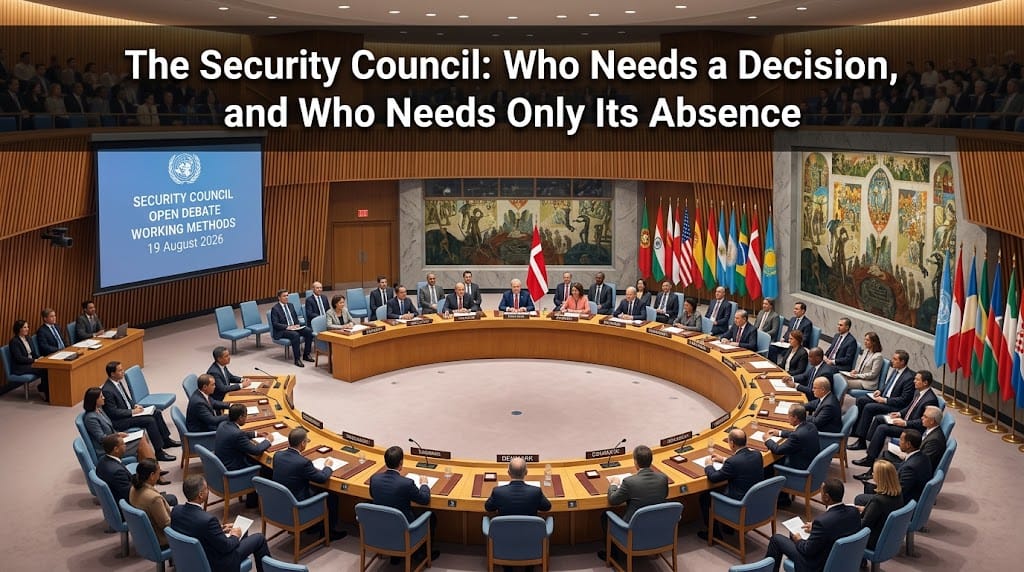
Israel’s ambassador to the United Nations, Danny Danon, told the Security Council on August 19 that the body had become “very good at holding meetings but very bad at making a difference.” Instead of spending its time on Iran, Hamas, Hezbollah and the Houthis, he said, the Council is repeatedly pulled into “political theater.” It was created to prevent wars, Danon said, not to hold fruitless meetings.
Gholamhossein Darzi, Iran’s ambassador and deputy permanent representative to the UN, spoke at the same meeting. As rendered by Press TV, Iran’s state English-language broadcaster, Darzi accused the Council of politicization, double standards and selective application of its own rules, and charged the United States and several other members with using Council procedures and meetings to advance politically motivated allegations against Iran. He also demanded neutrality from the Council president, meaning the country that chairs the meetings and sets the programme of work for its month.
The August 19 session was the Council’s annual open debate on its own working methods, convened by Denmark, which holds the presidency for August. Both complaints about procedure were made at the meeting devoted to procedure. The chair rotates monthly in English alphabetical order: Britain held it in February, the United States in March, and France takes it in September.
Danon proposed a mechanism. Raise the threshold for convening an emergency meeting from one Council member to three, and set criteria for what counts as an emergency. Darzi proposed none.
The Iranian complaint rests on Resolution 2231, adopted on July 20, 2015. It endorsed the nuclear deal, lifted the earlier UN sanctions on Iran and set a ten-year calendar under which all of its provisions lapse on October 18, 2025 and the Council closes the Iranian nuclear file. Iran’s permanent representative, Amir Saeid Iravani, put Tehran’s reading to the Council on December 23, 2025. The termination came on its own, on this reading, and required no separate vote, and from that date “it ceased to have any legal effect or operative mandate.” The Secretary-General then owes no further reports on the implementation of 2231, and the Council may not convene on the Iranian nuclear question under the agenda item “Non-proliferation.”
The US delegate replied at the same session that 2231 expired neither with the completion of the snapback process nor on the original termination day of October 18, and that all of its provisions remain in force except paragraphs 7, 8 and 16 to 20.
The dispute turns on dates. On August 28, 2025, France, Britain and Germany notified the Council that they were triggering snapback. The Council adopted nothing in the thirty days that followed, and on September 27, 2025, the UN sanctions lifted in 2015 came back, along with the 1737 sanctions committee and its list. The restored resolutions, 1696, 1737, 1747, 1803, 1835 and 1929, carry no expiry date.
This is where the two identical complaints part. The sanctions returned through inaction, because the Council decided nothing within thirty days. Lifting them takes action, a new resolution that the United States, Britain and France would each have to let through. Iran wants the Council to close the file. Danon wants the Council to convene less often. One of them needs a decision. The other needs only its absence.
