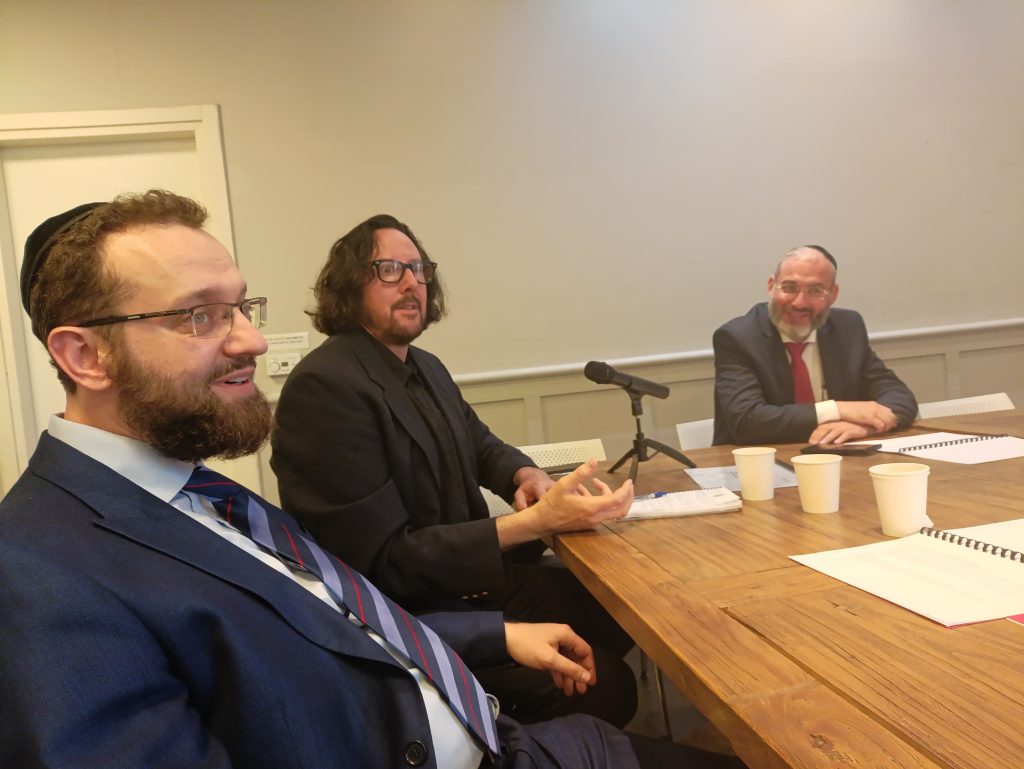
Experts discussed the phenomenon of “ontological bubbles“in contemporary Israeli society. Analyzed how radicalization of political agenda and dehumanization of political opponents, in closed ideological constructions, act as a tool of controlled chaos.
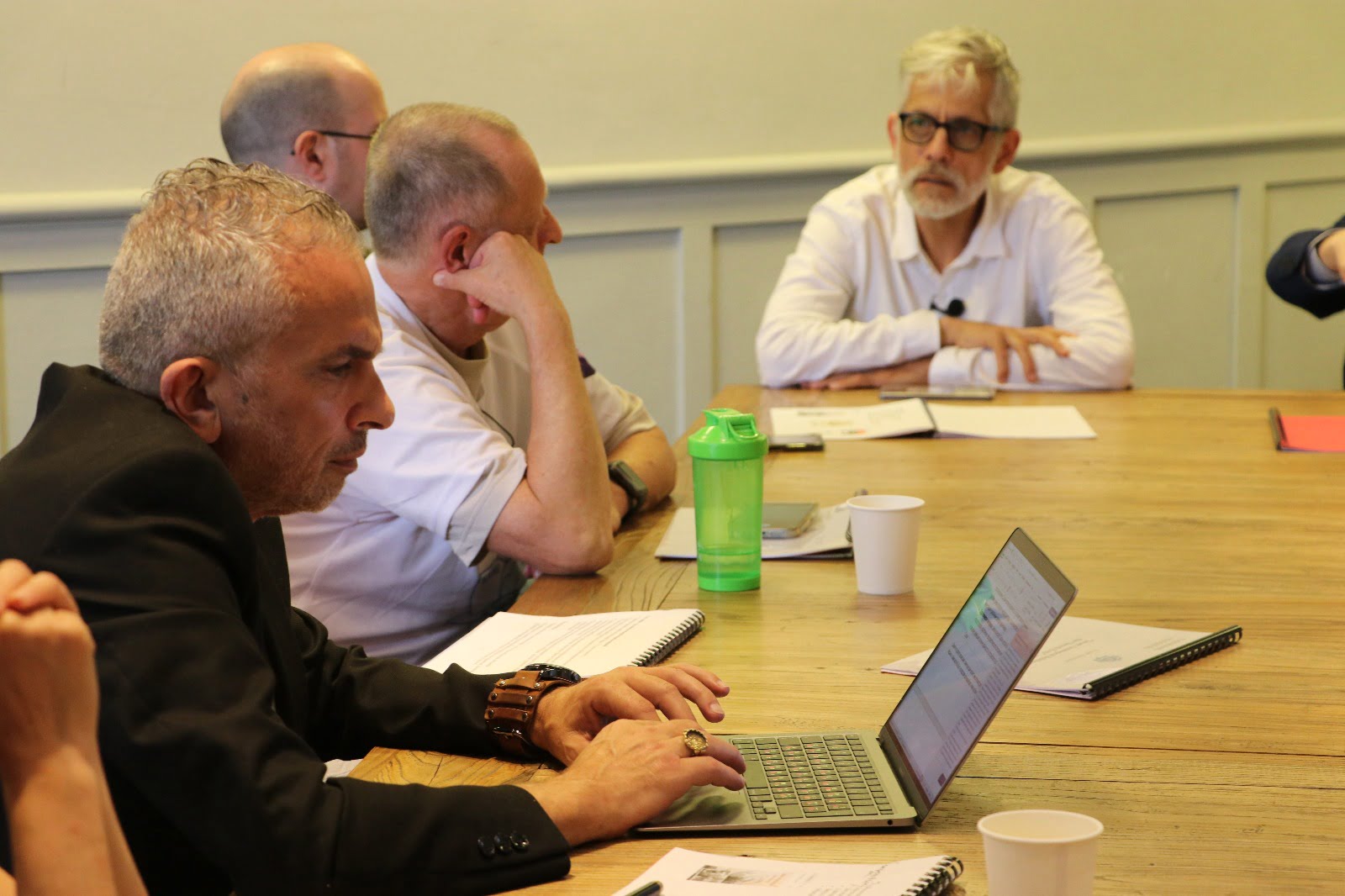
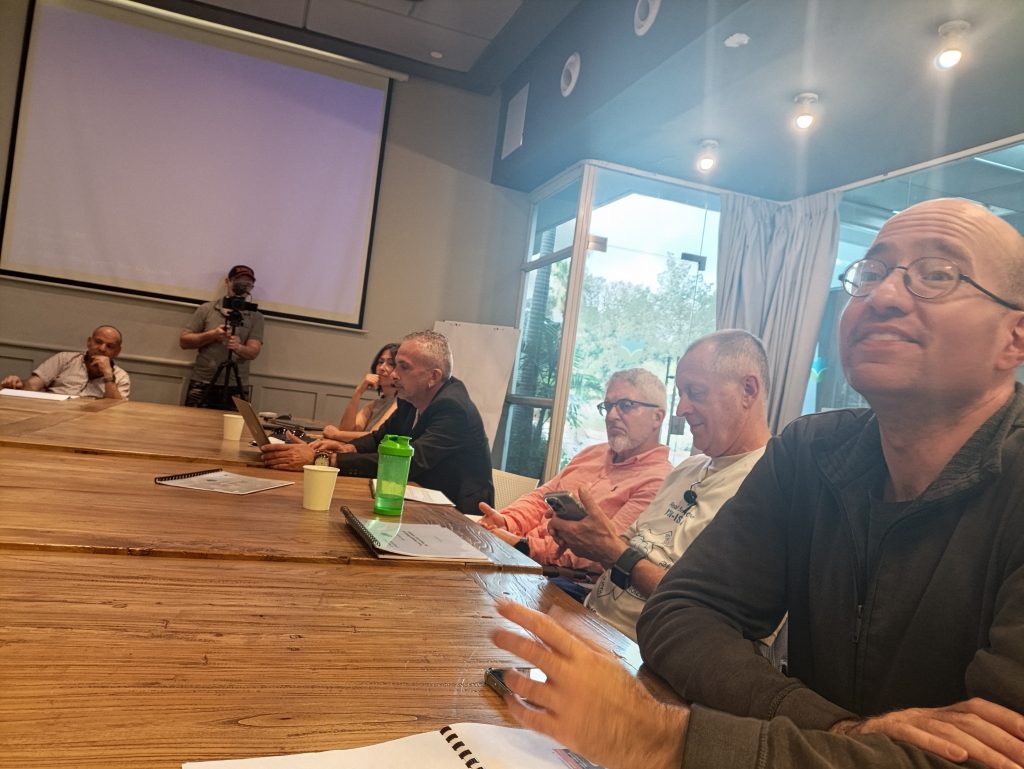
An expert discussion organized by the “Dor Moria” Association, the “Samuel Schwartzbard” Foundation, and the “Turei Zaav” Association took place in Tel Aviv on April 18, 2024. The event was titled “Israel: Ontological Bubbles as a Tool of Managed Chaos.” Experts discussed the phenomenon of “ontological bubbles” in contemporary Israeli society, analyzing how the radicalization of the political agenda and the dehumanization of political opponents within closed ideological constructs serve as tools of managed chaos.
Background of the “Haifa Format” Project
The “Haifa Format” project was initiated in 2017 by “Dor Moria” activists and experts who came to Israel from Russia and Ukraine. At that time, it was already anticipated that the processes of civil confrontation observed in Ukraine could become a reality for Israel. Unfortunately, these concerns were confirmed. Today, in 2024, Israeli society is divided by multiple socio-political narratives. In 2023-2024, “Dor Moria” conducted eight large-scale sociological studies, such as “Israelis Attitudes towards the Armed Conflict in Ukraine” (March-April 2023); “Israelis’ Attitudes towards Judicial Reform” (June 2023); “Expectations of Israelis for the U.S. Presidential Elections in 2024“ (August 2023); “The Image of the Future: Israel after the War” (October-November) and several others.
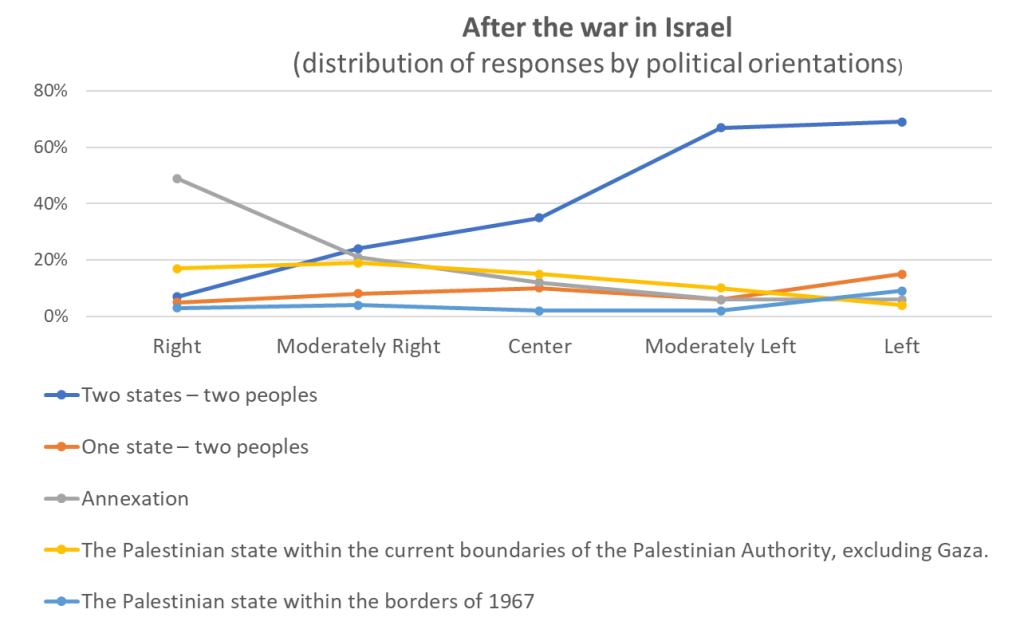
Based on our findings, it can be stated that the schism and radicalization of Israeli society are empirical facts. For example, a public opinion poll of Israelis conducted from 12.11.2023 to 16.11.2023 to study positions regarding Israel’s war with Hamas in the Gaza Strip showed a division between right and left. For instance, regarding the question “Is the complete destruction of Hamas possible?” the option “possible” varies 2.5 times from right to left (from 85% among the right to 32% among the left). At the same time, the option “impossible” differs 4.5 times between left and right (from 68% among the left to 15% among the right). The vision of Israel’s future after the war is also divided between political and religious-secular groups. Representatives of moderately and left-leaning political views are more supportive of the concept of “Two States for Two Peoples,” with 67% and 69% respectively. Overall, regarding the image of Israel’s political prospects, they show the greatest unity.
Not only have we come to this conclusion. Here’s a quote from the report of the “Israeli Institute of Democracy”: “The schism between groups is growing. Even the events of October 7 and the subsequent war, which were initially seen as unifying events, can now be seen as having only a temporary cohesive effect on the previously existing internal situation…”
Schism and Bubbles
The key to understanding what is happening for us became the hypothesis of “ontological bubbles” – dualistic competing worldviews forming in Israeli society. Their emergence is linked to the tendency of human thinking to simplify complex reality into binary oppositions of “us-them,” “good- evil.” Ontological bubbles arise in pairs, during confrontation between carriers of opposing ideas, values, and historical narratives. Each group absolutizes its own righteousness and completely denies the “truth” of the opponent. Radicalization reaches a point where the political opponent is no longer perceived as a human being, and political struggle turns into a struggle of the sons of light against the sons of darkness.
As Igor Kaminnik, the “Dor Moria” Association director, noted: “We see that the pair of ontological bubbles gravitate towards two poles – the ‘postmodernist’ and the ‘traditionalist.’ The postmodernist pole attempts to destroy any stable identities and traditions. The traditionalist, on the other hand, seeks to impose rigid identities and norms. The conservative camp focuses on security, traditional values, and a free market. The liberal camp advocates for reconciliation with Palestinians, minority rights, and a social state.” Lola Kolpina, PhD in sociology and the Dor Moria Analytical Center head, noted that the formation of such ontological bubbles in society with impenetrable walls for “other” opinions is a profitable business for the media and politicians. In the battle for audience attention, any idea is simplified into a meme, any conflict is inflated and dramatized. Rational discourse is pushed out of the public space. The problem is that people caught in ontological bubbles lose the ability to hear each other, locked in their informational cocoons. Any event only intensifies mutual rejection. As a result, the basic institutions of society are paralyzed, and the country teeters on the brink of chaos. In these conditions, conventional methods of information warfare no longer work, only exacerbating polarization. Political scientist and rabbi Mikhail Finkel, the Samuel Schwartzbard Foundation head, sees ontological bubbles as a tool for managed destabilization aimed at destroying Israel and believes it is necessary to resist these destructive tendencies. Professor from the USA, Aaron Cohen, showed that the problem of managed chaos is not only relevant to Israel: “Three corporations that control 87% of the American market include BlackRock, Vanguard, and State Street. These companies are often referred to as the ‘Big Three’ because of their dominant position in the asset management industry. The market is monopolized, including the media and platforms. So whether you’re on the right or the left, it doesn’t matter, the same people own Fox News, NBC, CNN, CBS, NYT, Facebook, Instagram, etc. From the far left to the far right media, the owners are all the same. And politicians are naturally in the pockets of these corporations. America’s military-industrial complex is also in these same hands, and huge money was made from the Ukrainian war.” If the goal is to turn political discussions, natural in democratic countries, into irreconcilable ontological bubbles, then media owners can certainly do it, possessing certain technologies. Writer and coordinator of the “Constitution Referendum Project for the State of Israel,” Eduard Batkis, notes that Israel’s internal rifts are compounded by divisions brought in from outside. For example, the situation with the war in Ukraine adds additional internal political tension. The activity of pro-Ukrainian forces in Israel pushes the country towards active participation in the Ukrainian conflict, which is officially referred to differently in Russia and Ukraine, but is never named as a war. At the same time, monitoring of Israeli concerns regarding the war in Ukraine shows an interesting dynamic and results. In June 2023, when asked, “Which of the following possible risks, in your opinion, is the main one when involving the State of Israel in the conflict between Russia and Ukraine?”, 54% of respondents indicated “Deterioration of relations with Russia.” However, after the Hamas attack on October 7, this figure decreased to 48%.
“Derech Eretz” as Saving Values
As noted by Alexander Haiat, a rabbi and the “Turei Zaav” association head, in order to preserve Israel as a country, it is necessary to oppose ontological bubbles with values and principles that would unite both secular and religious Israelis. He referred to “Derech Eretz” as a kind of bridge between religious and secular: “Derech Eretz” in Judaism implies: Respect for the dignity and rights of every human being as a creation of God; Harmonious combination of Torah (spirituality) with “earthly” affairs and concerns; Primacy of the common good over selfish interests. “Derech Eretz” as universal ethics: Basic principles of humanity, relevant to people of different views; A guide for moral behavior in society; Antidote to fanaticism, intolerance, moral absolutism; Basis for dialogue and cooperation “above barriers”; Path to harmonizing Israeli society in its diversity.
The “Dor Moria” Association, the “Samuel Schwartzbard” Foundation, and the “Turei Zaav” Association have decided to join forces within the all-Israeli movement “Derech Eretz.” The goal of this movement is to preserve and strengthen our state, counteracting the formation of ontological bubbles by uniting the healthy forces of Israeli society. The “Derech Eretz” movement believes that this path is possible. And we invite all people of goodwill to walk it together. For the future of Israel and our children.